KPV in microbial cultures
Staphylococcus aureus and Candida albicans make the question of growth quite specific.
Staphylococcus aureus and Candida albicans
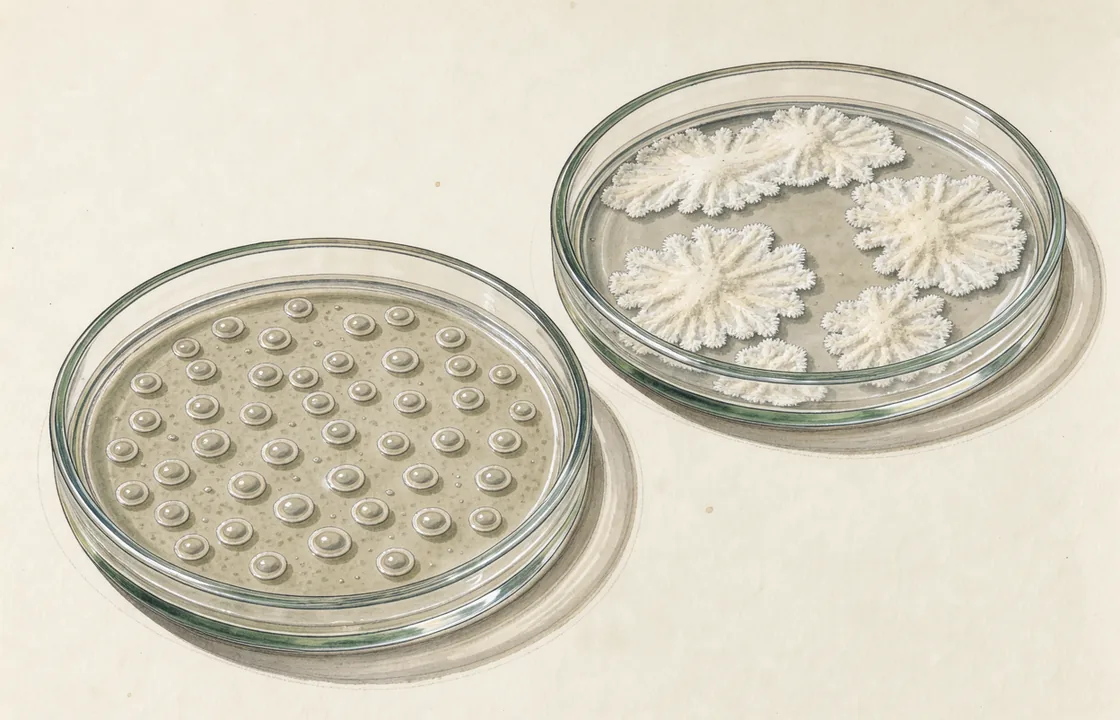
The antimicrobial study of alpha-MSH peptides examined microbial cultures, including the C-terminal tripeptide KPV. Alpha-MSH and its tripeptide reduced the viability of Staphylococcus aureus and Candida albicans. Viability concerns whether the organisms remain alive; this outcome is distinct from measuring inflammation in a tissue.
The pairing has an appealing bluntness. One bacterial organism and one fungal organism put something concrete behind the adjective antimicrobial. I’d start with their names before entertaining a larger story about skin.
| Organism in the cultures | Reported observation |
|---|---|
| Staphylococcus aureus | Reduced viability |
| Candida albicans | Reduced viability |
Both rows describe in-vitro observations in the microbial study. They supply neither a comparison of clinical treatments nor an account of what happens to an entire community of skin microbes.
A mouse vaginitis model with (CKPV)2
A different Candida albicans study used the synthetic melanocortin dimer (CKPV)2 in a mouse model of vaginitis. It reported reduced fungal burden and inflammation, associated with macrophage M2 polarisation—a change in immune-cell state.
The location and the compound deserve to remain conspicuous. These were mice with a vaginal infection model, and the preparation was a dimer containing the KPV motif. Transferring that result to plain KPV on human skin would require further evidence.
I appreciate the dual outcome without treating it as a general permission slip. Fewer fungi and less inflammation can be examined together. The interesting work lies in explaining how the particular preparation produced both.
Further microbial experiments
Which organisms would respond in a broader panel? Would the same response persist in a more complicated tissue setting? I’d welcome those experiments before giving the culture result a wider scope.
For now, the inflammation experiments give the garden another task: reducing an unwanted response from the host’s own cells. That task needs its own measurements.