A KPV-loaded wound gel
The preparation brings several aims to the same site: antibacterial activity, inflammation control and repair.
At the application site
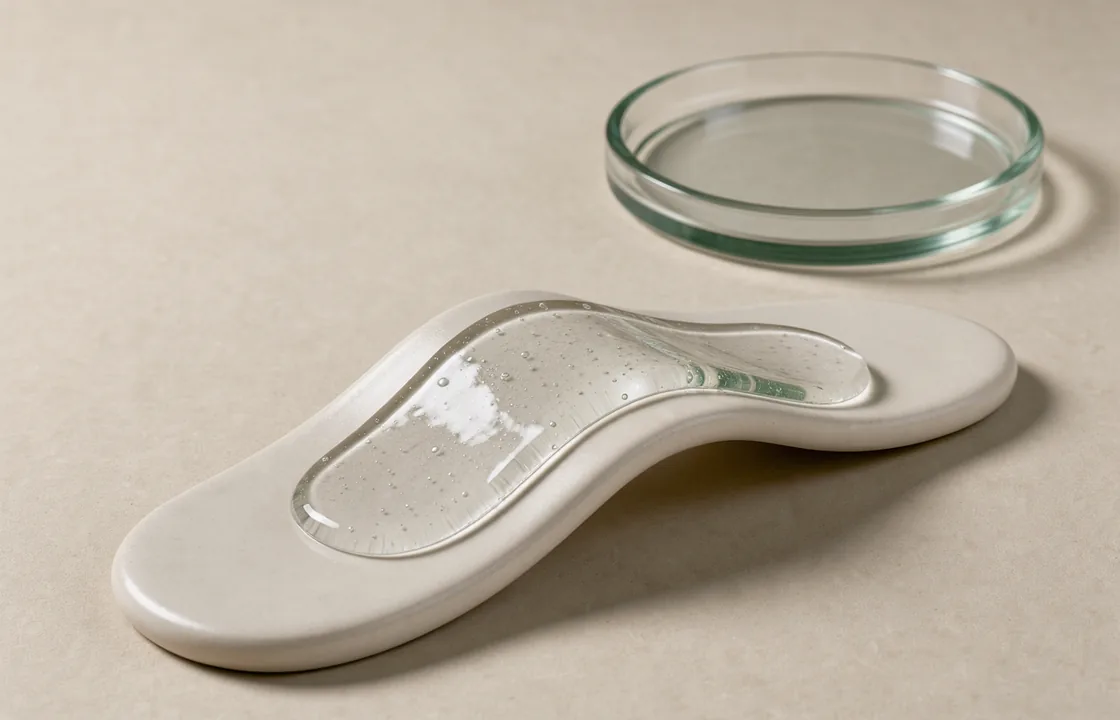
The mucoadhesive hydrogel capturing KPV was studied in vitro and in animal wound models. The preparation combined antibacterial, anti-inflammatory and pro-healing effects at the application site. Mucoadhesive describes a material designed to adhere to a mucosal surface.
The combination of jobs earns its place in this garden. I distrust an indiscriminate invitation to grow. An experiment gets more interesting when it names the responses it encourages and those it aims to suppress. Here, the reported antibacterial activity sits alongside the tissue-repair outcome.
The result describes the KPV-loaded gel. It offers a material to inspect, with the peptide and its surroundings together. Removing the gel from the account would change the preparation being discussed.
The antibacterial result does not describe how a gel changes the wider population of organisms on human skin. Nor does the animal wound result establish an experience of healing in a person. Those remain separate questions.
Stabilising the peptide
A separate hydrogel materials study stabilised KPV and enabled controlled release. It used a self-cross-linked system made from cysteamine-grafted gamma-polyglutamic acid. The recorded work concerns in-vitro materials characterisation.
That unwieldy chemical name is useful here. It makes the engineered support harder to mistake for a passive detail. Stabilisation and release are experimental properties of a particular system; they deserve attention before a result is attributed to an ingredient in isolation.
I’d enjoy a comparison that made the supporting materials the variable. That is a question prompted by the papers, not a comparison they report.
The keratinocyte experiments offer a different setting for the host-cell question: survival and inflammatory signalling under a particulate challenge.